
History
Pompeii, the eruption that stopped time
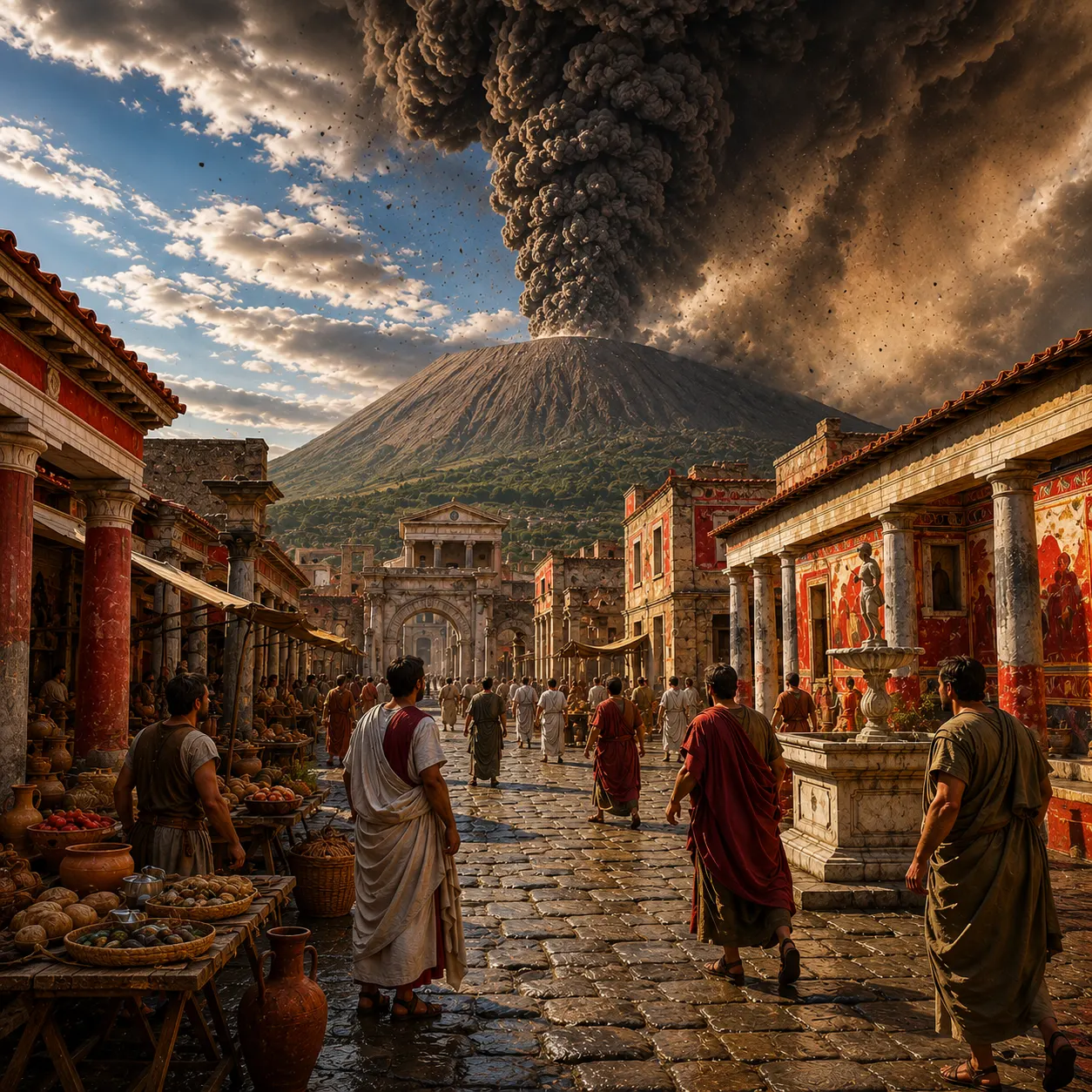
In 79 AD, Vesuvius buried Pompeii under a rain of pumice and ash, erasing in a few hours one of the most prosperous cities of the Roman Empire. The eruption occurred in two phases: first a column of debris that collapsed roofs, then pyroclastic flows that instantly incinerated those who remained. For centuries the city lay buried until excavations began in the 1700s. In 1863, archaeologist Giuseppe Fiorelli had the intuition to pour liquid plaster into the voids left by decomposed bodies in the ash, creating the famous casts that restored the victims' final poses. Today Pompeii is a warning: Vesuvius sleeps, but is not extinct.