
Literature · Premium
The poet who descended into Hell
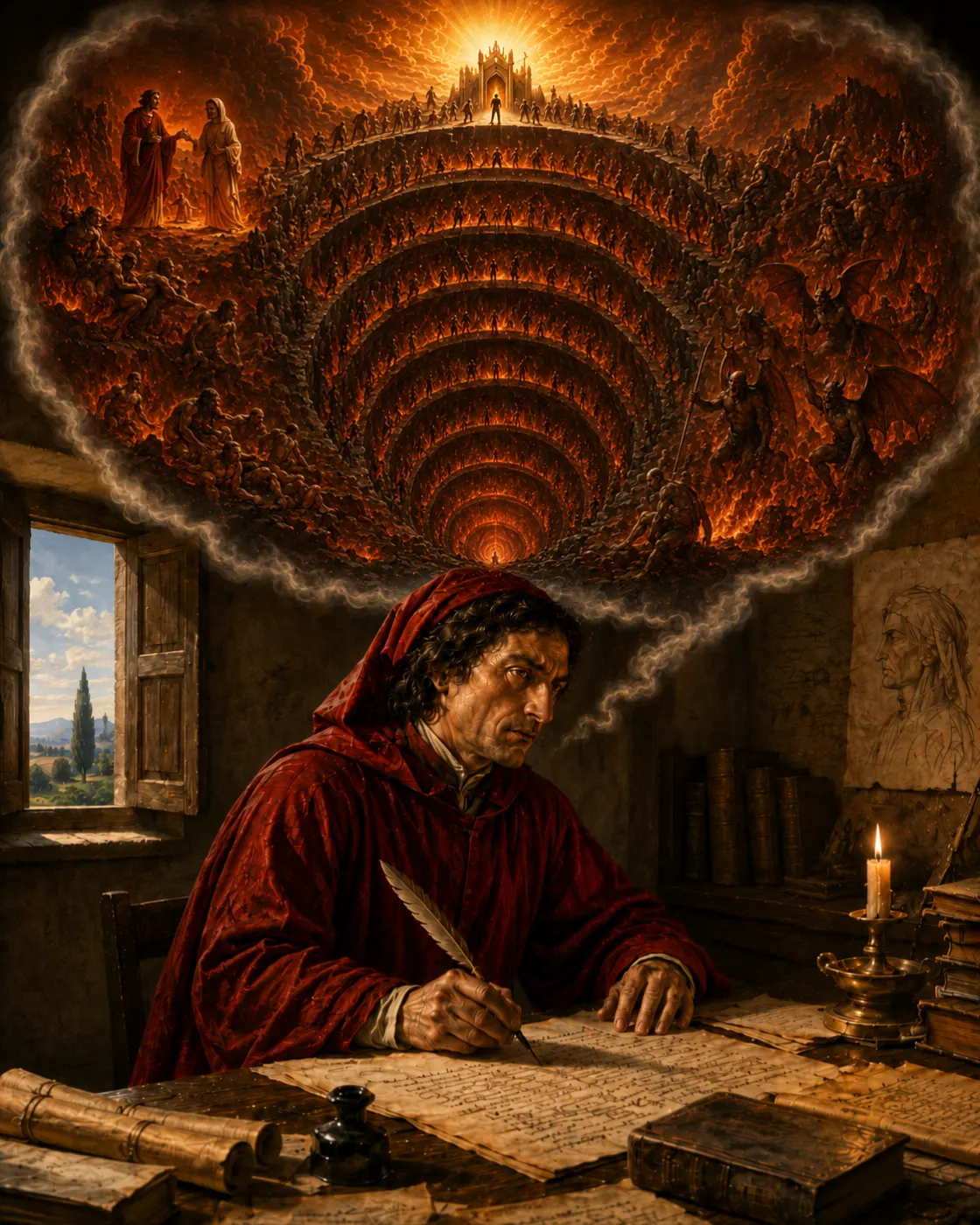
In 1302, Dante Alighieri, prior of Florence and ambassador to the pope, was sentenced to perpetual exile on the false charge of barratry. He was never able to see his city again. From that pain, from that wound, the "Divine Comedy" was born, the greatest poem in Italian literature. Dante chose to write it in the vernacular, the language of the people, so that it could be read by everyone, not only by the learned. He imagined a journey through the three realms of the afterlife: Inferno, Purgatorio and Paradiso. His guide was first Virgil, a symbol of human reason, and then Beatrice, a symbol of faith and theology. Dante's Inferno is governed by the law of contrapasso, whereby every punishment perfectly mirrors the sin committed in life. Exile taught Dante the bitterness of having to depend on the charity or hospitality of others, but it also gave him the universal perspective of one who has lost everything and found the strength to rebuild himself. Today his work still speaks to anyone who has lost their way and seeks meaning in their life.
Premium story: open the app to listen to it in full.